
History

Subject Leads

History at Bidston Village
-
Mrs Cartner is our History co-ordinator at Bidston Village CE Primary School. She is passionate about history because she gets to inspire, explore and delve into history so that children can see how events and legacies from the past shape our world as we know it. This allows children to see how choices made today can impact our future too. It’s rewarding to see children develop investigative and interpreting skills to make sense of times gone by and enable them to develop into real historians! With the addition of enrichment activities we can bring our subject to life.
-
At Bidston Village C of E Primary School, our history curriculum is designed to allow pupils to gain a coherent knowledge and understanding of Britain’s past and that of the wider world. The curriculum focuses on pupils developing a sound understanding of the chronological narrative of history and understanding how past civilisations have lasting legacies that shape the present. It is our intent to deliver a curriculum that builds on previous learning and ignites children’s curiosity to explore, analyse and develop a wide range of historical skills when learning about the past. Planned progression of knowledge, skills and understanding throughout the primary phase, provides a pathway towards living fulfilling lives and contributing to society, through fostering their curiosity and encouraging them to ask perceptive questions. Through this learning about our past, children will gain an understanding of our present and future.
-
History is taught termly throughout our school. In EYFS, children begin to foster an understanding and knowledge of their own life story, leading to exploring known figures in the recent past. From Year 1 to Year 6, The National Curriculum is taught in conjunction with Curriculum Essentials, which has enabled us to develop, plan and deliver a rich curriculum that ensures that skills and knowledge are built on year by year and sequenced appropriately to maximise learning for all children. It is important that the children develop progressive skills of a historian throughout their time at Bidston Village and do not just learn a series of facts about the past. In History, pupils find evidence, analyse it and, through integrating the Voice 21 Oracy framework, utilise effective discussion techniques to become analytical historical thinkers and reach their own conclusions.
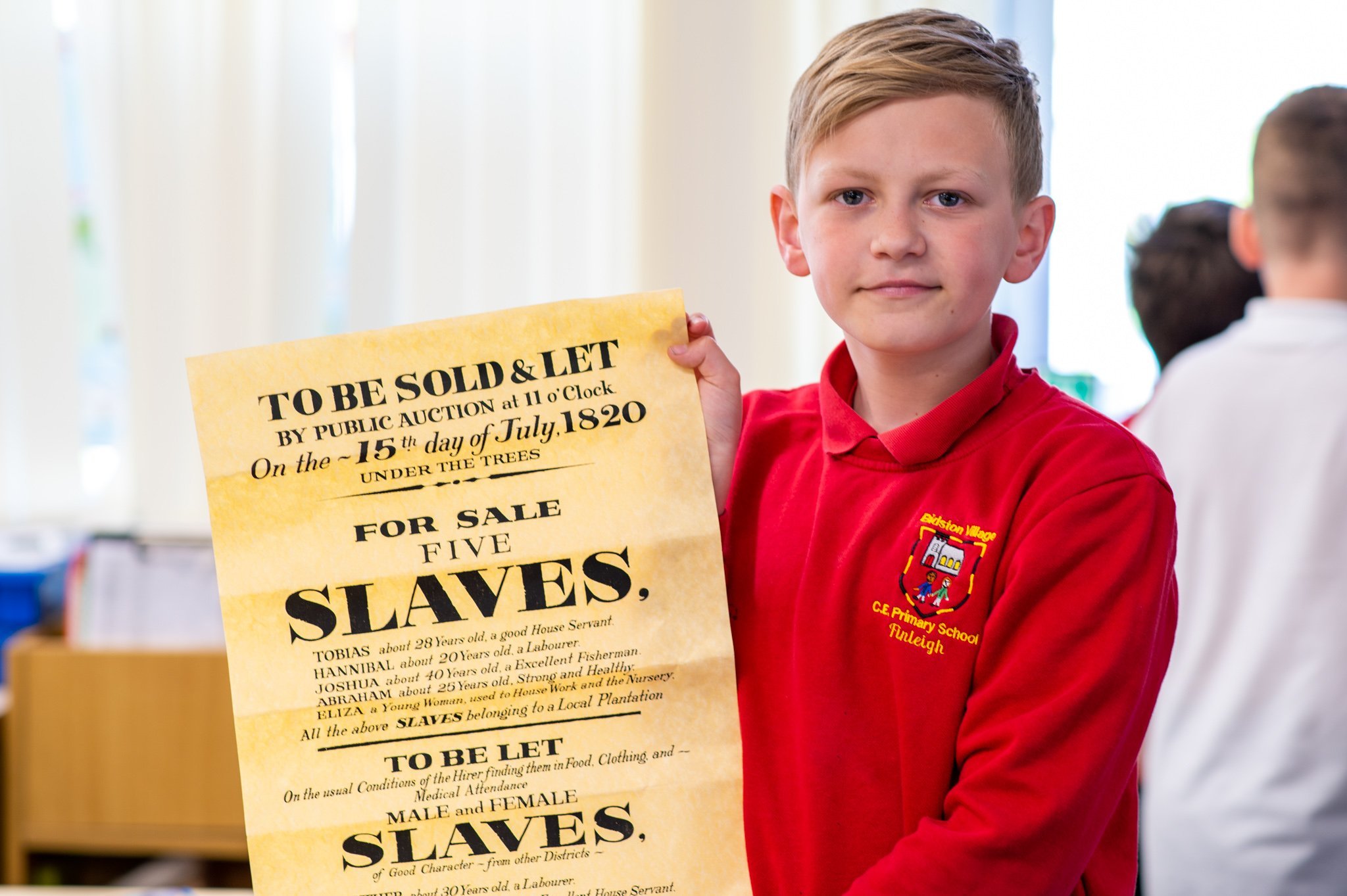
Through the use of thought-provoking artefacts and resources, children are able to develop a good understanding of key historical vocabulary and use this to construct informed responses that involve thoughtful selection and organisation of relevant historical information. Visitors and educational visits are also woven into the curriculum to enhance and enrich learning. Our immediate and wider local area are steeped in rich historical links ranging from Viking influences across the Wirral, Port Sunlight- the innovative village built by the Lever Brothers, to the local air raid shelters in Bidston. It is the utilisation of the local area over a range of local studies that bring history to life for our children.
As historians, we also use cross-curricular links with Computing, Geography, Oracy and Reading to be able to research, interpret evidence, including primary and secondary sources, and have the necessary skills to present their points of view; a skill that will help them in their adult life.
-
By the time children leave Bidston Village they should have developed:
A secure knowledge and understanding of people, events and contexts from the historical periods covered.
The ability to think critically about history and communicate confidently in styles appropriate to a range of audiences.
The ability to consistently support, evaluate and challenge their own and others’ views using detailed, appropriate and accurate historical evidence derived from a range of sources.
The ability to think, reflect, debate, discuss and evaluate the past, forming and refining questions and lines of enquiry.
A passion for history and an enthusiastic engagement in learning, which develops their sense of curiosity about the past and their understanding of how and why people interpret the past in different ways.
A respect for historical evidence and the ability to make robust and critical use of it to support their explanations and judgements.
A desire to embrace challenging activities, including opportunities to undertake high-quality research across a range of history topics.
-
"I learned about the Great Fire of London. It burned lots of houses! People had to use buckets of water to stop it. I can’t imagine my house on fire!" - Y2
"We learned about Guy Fawkes. He tried to blow up the King a long time ago! We also talked about the Great Fire of London. Houses were made of wood, so they burned quickly. It was scary! People back then had to be very brave." - Y2
"We studied Ancient Greece. They had big temples and cool sculptures. They also invented democracy and sports like the Olympics! I compared life in Greece with life in Britain a long time ago. It was very different but interesting." - Y5
"We learned about Roman soldiers. They had strong armour and big shields. Romans built roads and baths that helped people. I tried to imagine being a soldier marching in their army. Life was really different back then!" - Y4
"We looked at old pictures of our town. Streets are different now! I asked, 'What did kids do for fun?' and 'How long ago was this?' We used photos and old toys to find answers. History is like being a detective." - Y3
"I talked about my mum and dad today. I can name my brother and my friend. My grandma is older than me. People in stories look different to me but they do some of the same things!" - Nursery

