
Phonics, Reading and Writing

Phonics at Bidston Village


Subject Lead


-
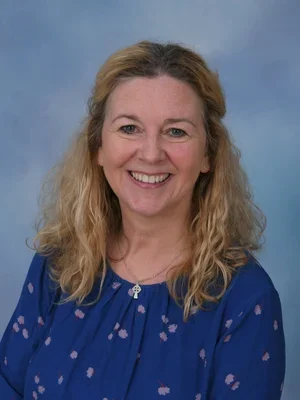
Hi, my name is Mrs Lynch and I lead phonics. As the Phonics and Early Reading Lead for Read, Write Inc. in our primary school, I feel incredibly proud to champion a subject that truly transforms children’s educational journeys. I love this role because it allows me to support both pupils and staff in building the strong foundations that every child needs to become a confident, fluent reader. Phonics is such an important part of early education—it unlocks access to the whole curriculum, fosters independence, and opens the door to a lifelong love of reading. Seeing children develop their skills step by step, and watching their confidence grow as they realise they can read, is one of the most rewarding aspects of my job. My role ensures that every child has the opportunity to succeed, feel empowered, and discover the joy and possibilities that reading brings.
-
The government strongly recommend the use of synthetic phonics when teaching early literacy skills to children. Synthetic phonics is simply the ability to convert a letter or letter group into sounds that are then blended together into a word. Here at Bidston Village C.E Primary School, we are using the Read Write Inc (RWI) programme to get children off to a flying start with their literacy. RWI is a method of learning based upon letter sounds and phonics, and we use it to aid children in their reading and writing.
Reading opens the door to learning. A child who reads a lot will become a good reader. A good reader will be able to read more challenging material. A child who can read more challenging material is a child who will learn. The more a child learns, the more he or she will want to find out.
Using RWI, the children learn to read effortlessly so they can put all their energy into comprehending what they read. It also allows them to spell effortlessly so they can put all their energy into composing what they write.
The children are assessed regularly and grouped according to their ability. They will work with a RWI trained teacher or teaching assistant. In addition to the RWI, children will also be working on writing skills in their classes with their own teacher.
-
At Bidston Village we teach phonics through the Read Write Inc. (RWI) programme, a structured and systematic approach to early reading. Children learn to recognise sounds, blend them to read words, and segment them to support spelling. Phonics is taught daily in fast-paced, engaging sessions, ensuring children build confidence and fluency quickly. Books are closely matched to each child’s phonics knowledge so that they experience success and develop strong decoding skills.
Alongside phonics, we place a strong emphasis on developing comprehension, vocabulary and a love of reading, giving children the foundations they need to become confident, independent readers. Children in Foundation, Year 1 and Year 2 are assessed every 6 weeks and grouped by their phonic ability. The children are grouped into small groups for their daily Read Write Inc lesson. Children will learn the sounds in order beginning with set 1, set 2 and finally set 3.
-
When using RWI to read the children will:
· Learn 44 sounds and the corresponding letter/letter groups using simple prompts.
· Learn to read words using sound blending (Fred talk).
· Read lively stories featuring words they have learnt to sound out.
· Show that they comprehend the stories by answering 'Find It' and 'Prove It'.
Alongside teaching early reading through Read Write Inc. (RWI), we place a strong emphasis on developing a love of reading. As children’s phonics knowledge and reading confidence grow through RWI, they are encouraged to enjoy stories, poems and non-fiction texts beyond their phonics lessons. Daily story times, shared reading and access to a wide range of high-quality books help children experience reading as enjoyable and meaningful. This balance ensures children become both skilled readers and enthusiastic readers who read for pleasure.
-
When using RWI to write the children will:
· Learn to write the letter/letter groups which represent the 44 sounds.
· Learn to write words by saying the sounds and graphemes (Fred fingers).
· Learn to write simple then more complex sentences.
Writing is taught alongside reading through the Read Write Inc. (RWI) programme. Children are taught to use their phonics knowledge to segment sounds and spell words accurately. A strong emphasis is placed on oral composition, where children practise saying sentences aloud, developing vocabulary, sentence structure and confidence before writing. Dictation is used regularly to help children apply their phonics skills, punctuation and spelling in full sentences. This structured approach ensures children develop the skills they need to write clearly, accurately and with growing independence.
-
Oracy plays a vital role in the Read Write Inc. (RWI) programme. Children are encouraged to talk, listen and respond in every lesson, helping them develop confidence in spoken language. Through partner talk, oral rehearsal and discussion, they learn to articulate ideas clearly and use new vocabulary in context. This strong focus on oracy supports children’s reading comprehension and writing development, ensuring they can express their thoughts verbally before applying them in reading and writing.
In RWI lessons, children are encouraged to:
Answer questions to demonstrate understanding and build confidence.
Practice every activity to reinforce learning.
Take turns talking and listening to each other, developing communication skills.
Give positive praise to support and encourage their peers.
This approach ensures children not only develop strong phonics skills but also become confident, articulate communicators who enjoy learning together.
-
Help your child learn to read words by sounding-blending (Fred talk) eg. c-a-t = cat, sh-o-p = shop. Children learn to read words by blending the letter sounds that are in the Speed Sounds set (shown further down the page).
Help your child to say the pure sounds ('m' not 'muh', 's' not 'suh' etc.) as quickly as they can, and then blend the sounds together to say the whole word. Support your child at home using the following guide:
-
"I like reading the words with my partner – we help each other." – Reception
"I enjoy learning new sounds every day. It’s fun to try them in our stories." – Year 1
"I feel proud when I can write the words by myself after hearing them." – Year 1
"Our teacher helps us when we get stuck, and we give each other praise." – Reception
“I know how to use my phonics to help with my writing.” - Year 2
“I know the more I practice the better my reading will be.” - Year 2